

If you’re shopping for a solar-powered watch, Citizen Eco-Drive and Casio Tough Solar are two of the most established technologies you’ll encounter. Both use light to recharge an internal energy-storage cell, both reduce the need for routine battery replacement, and both have decades of development behind them.
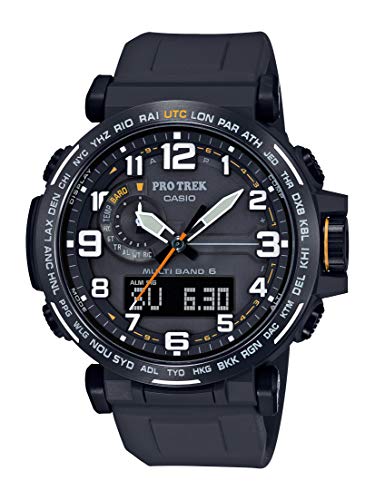
The important difference is how the two companies use that technology. Citizen generally integrates Eco-Drive into traditional analog watches, ranging from simple everyday models to rugged Promaster watches. Casio frequently combines Tough Solar with digital and analog-digital watches, particularly in its G-Shock and outdoor-focused collections.
So which is better? Our answer depends on what you want from the watch. If you want a traditional solar-powered watch that looks and wears like a conventional timepiece, we’d give Citizen Eco-Drive the edge. If you prioritize ruggedness, digital functionality, outdoor features, and advanced timekeeping functions, Casio Tough Solar is the more compelling choice.
In this comparison, we’ll look at solar charging, power reserve, accuracy, reliability, durability, features, maintenance, everyday wear, and outdoor use to determine which technology makes more sense for different types of buyers.
Citizen Eco-Drive vs Casio Tough Solar: Quick Comparison
Feature | Citizen Eco-Drive | Casio Tough Solar |
|---|---|---|
Primary design philosophy | Traditional watches | Functional/rugged watches |
Display | Primarily analog | Digital, analog-digital, and analog |
Solar charging | Light-powered | Light-powered |
Rechargeable energy storage | Yes | Yes |
Artificial-light charging | Yes | Yes |
Digital functions | Limited on most models | Extensive on many models |
Shock resistance | Model dependent | Excellent on G-Shock models |
Radio/Bluetooth | Available on select models | Available on select models |
Best for | Traditional everyday watches | Outdoor and multifunction watches |
Our traditional-watch pick | Citizen | — |
Our rugged/function pick | — | Casio |
One important qualification applies throughout this comparison: Eco-Drive and Tough Solar are technologies, not individual watches. Performance varies significantly between individual models, so power reserve, accuracy, water resistance, crystal material, and features should always be evaluated at the watch level.
What Is Citizen Eco-Drive?
Citizen Eco-Drive is the company’s proprietary light-powered watch technology. A solar cell beneath the dial converts available light into electrical energy, which is stored in a rechargeable energy-storage cell and used to operate the quartz movement.
Citizen has been developing light-powered watches for decades. The company traces its light-powered analog quartz technology back to 1976, making solar power an important part of Citizen’s identity as a watch manufacturer.
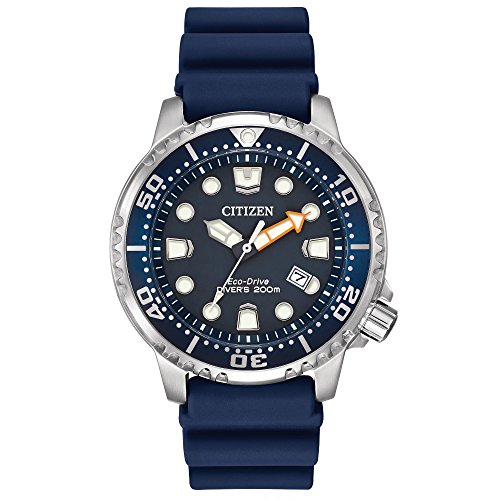
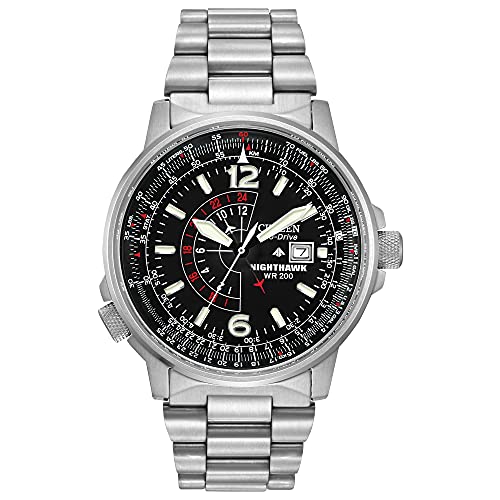
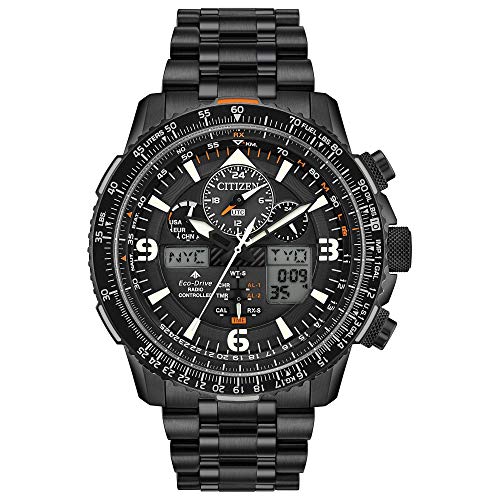
One of Eco-Drive’s biggest strengths is that the solar technology can be incorporated into watches that look completely conventional.
A Citizen Eco-Drive can look like a traditional field watch, dress watch, dive watch, or everyday sports watch without the dial necessarily revealing that it is solar-powered.
That gives Citizen a significant advantage for buyers who want the convenience of solar power without wanting a digital or highly technical-looking watch.


What Is Casio Tough Solar?
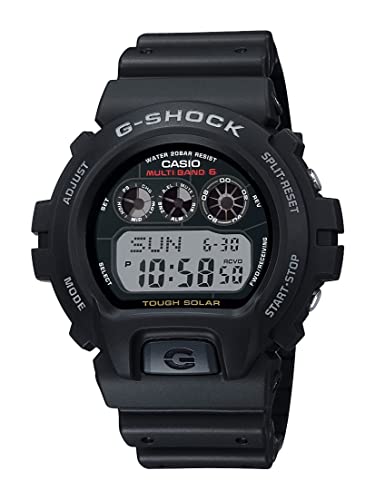
Tough Solar is Casio’s proprietary solar-charging system. Solar cells convert available light into electrical energy, which is stored in a rechargeable battery and used to operate the watch.
Casio says Tough Solar can convert light from sources including fluorescent lighting, rather than relying exclusively on direct sunlight. The stored energy can operate functions including alarms, illumination, radio reception, and Bluetooth on applicable models.
This illustrates an important difference between the two brands.
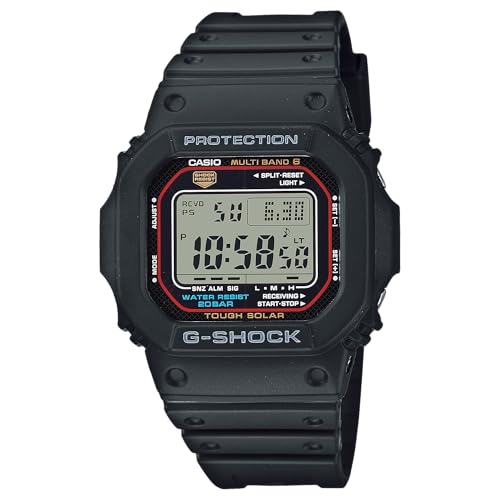
Citizen can use solar technology to make a traditional analog watch extremely low-maintenance. Casio frequently uses solar power as the energy source for a much more feature-rich electronic watch.
That approach is particularly evident in solar-powered G-Shock models.


Eco-Drive vs Tough Solar: How Do They Work?
At the fundamental level, the two technologies work in much the same way.
Both systems:
- Capture light with a solar cell.
- Convert that light into electrical energy.
- Store the energy in a rechargeable cell.
- Use the stored energy to operate the watch.
- Reduce the need for conventional battery replacement.
The difference is primarily in how the manufacturers integrate solar technology into their watches and how much power those watches require.
A simple three-hand Citizen Eco-Drive has relatively modest power requirements. A Casio G-Shock equipped with an LCD display, multiple alarms, automatic illumination, Bluetooth, sensors, or radio-controlled timekeeping has considerably more electronic hardware to power.
Casio specifically designed Tough Solar to support watches with demanding electronic functions, while Citizen has successfully integrated Eco-Drive into everything from simple three-hand watches to sophisticated professional models.
Which Has Better Solar Charging?
We wouldn’t declare a universal winner here.
Both Citizen and Casio have mature solar technologies, and both are designed to operate using more than direct sunlight. Casio specifically states that Tough Solar can convert light from fluorescent lamps and other weaker sources into electrical energy.
Citizen Eco-Drive watches are similarly designed to recharge from both natural and artificial light.
For normal ownership, the more important point is that neither system requires you to deliberately place the watch in direct sunlight every day.
If you wear a solar watch regularly and expose it to ordinary ambient light, the system can maintain its stored energy without requiring much thought from the owner.
That’s one of the reasons we consider solar quartz such a good fit for an everyday watch.
Which Has the Longer Power Reserve?
This is an area where broad brand-level comparisons can become misleading.
There isn’t one Eco-Drive power reserve and one Tough Solar power reserve. The reserve depends on the individual movement and watch.
Citizen Eco-Drive watches can provide substantial power reserves when fully charged, but the exact specification varies between calibers.
Casio is similar. Some Tough Solar models can operate for many months without additional light, while certain G-Shock models can extend their reserve considerably further by using power-saving functions. Casio’s technology documentation states that some Tough Solar G-Shock models can operate for up to 24 months in darkness, depending on the model.
Our recommendation is therefore not to choose between the brands based on a generalized power-reserve claim.
Check the published specifications for the specific watch you’re considering.
Citizen Eco-Drive vs Casio Tough Solar Accuracy
Solar technology itself doesn’t determine accuracy.
Both Citizen and Casio use quartz movements, and accuracy varies by movement and model.
A basic Eco-Drive analog watch and a high-end G-Shock with radio-controlled or Bluetooth time correction are fundamentally different products.
Some Casio Tough Solar watches combine solar charging with Multiband 6 radio-controlled timekeeping or Bluetooth smartphone synchronization, depending on the model. Casio documents both Bluetooth-based time correction and radio-controlled models in its technology information.
That gives Casio an advantage if your definition of accuracy includes automatic time synchronization.
For ordinary quartz timekeeping, however, both brands offer excellent accuracy.
Which Is More Reliable?
We wouldn’t declare one technology universally more reliable based solely on the manufacturer.
Both technologies have been developed over many years, and both companies have extensive experience producing solar-powered quartz watches.
What matters more is the individual watch, movement, construction, and intended use.
A simple Citizen Eco-Drive analog watch has relatively few components involved in its operation. A sophisticated Casio Tough Solar G-Shock may have considerably more electronics and functions.
That doesn’t make the Casio less reliable. G-Shock’s entire design philosophy revolves around durability and resistance to demanding use.
It simply means the two manufacturers are solving somewhat different problems.
Which Is More Durable?
If we’re talking specifically about shock and physical abuse, we give the advantage to Casio.
Particularly when Tough Solar is combined with G-Shock construction, durability becomes a central part of the watch rather than simply another specification.
Casio’s Tough Solar technology is used throughout its rugged G-Shock range, where solar charging is combined with shock resistance and other technologies designed for demanding environments.
Citizen certainly produces rugged watches, particularly within the Promaster collection.
However, if your definition of durability includes regular impacts, outdoor work, equipment use, and general abuse, a Tough Solar G-Shock is difficult to beat.
Our winner for rugged durability: Casio Tough Solar
Which Looks More Like a Traditional Watch?
This isn’t particularly close.
Our winner: Citizen Eco-Drive
Citizen has a major advantage if you want a solar watch that looks like a conventional analog watch.
Eco-Drive is available in everything from simple field watches to dress watches and professional dive watches. The solar cell can be positioned beneath the dial, allowing the watch to retain a traditional appearance.
Casio does make analog Tough Solar watches, but much of its solar lineup has a more technical or sporty appearance.
If you want to wear a solar watch with business-casual clothing or in a more traditional setting, Citizen generally gives you more choices.
Which Has Better Features?
Our winner: Casio Tough Solar
This is where Tough Solar really separates itself.
Depending on the model, Casio can combine solar power with:
- Digital displays
- Alarms
- Countdown timers
- Stopwatches
- World time
- Automatic illumination
- Radio-controlled timekeeping
- Bluetooth connectivity
- Sensors
- Power-saving modes
- Smartphone integration
Casio specifically describes Tough Solar as providing power for functions such as measurements, radio reception, Bluetooth connectivity, illumination, and alarms.
Citizen also produces feature-rich watches, but Casio has made multifunction electronic watches a central part of its product strategy.
If you want your watch to function as a piece of outdoor equipment, Casio is the clear choice.
Which Is Better for Everyday Wear?
This depends largely on what you want your everyday watch to look like.
For a traditional everyday watch, we would choose Citizen Eco-Drive.
A Citizen can work with jeans and a T-shirt, business-casual clothing, or more formal clothing depending on the model. You get the convenience of solar power without necessarily making the watch look technical.
For someone who prefers a rugged or sporty appearance, Casio becomes more attractive.
A Tough Solar G-Shock is especially compelling if you want something you can wear without worrying much about knocks and bumps.
Traditional everyday wear: Citizen Eco-Drive
Rugged everyday wear: Casio Tough Solar
Which Is Better for Hiking and Outdoor Use?
We give the advantage to Casio, particularly when comparing a Tough Solar G-Shock with a conventional analog Eco-Drive.
Outdoor use can benefit from features that aren’t necessary on a traditional watch. A countdown timer, alarm, illumination, world time, stopwatch, or additional electronic functions can be genuinely useful when you’re away from home.
Casio also combines Tough Solar with shock-resistant G-Shock construction on many models.
Citizen’s Promaster line is a serious competitor, especially if you prefer an analog watch and want something that looks more like traditional outdoor equipment.
Our recommendation therefore depends on the type of outdoor use.
For maximum functionality and abuse resistance: Casio.
For a traditional analog outdoor watch: Citizen.
Which Is Better for a Field Watch?
For a traditional field-watch design, we’d choose Citizen Eco-Drive.
Eco-Drive works particularly well with the field-watch concept. A simple analog dial combined with solar power creates a watch that is easy to read, easy to wear, and requires very little attention.
Timex is also an important competitor in this category. The Expedition Scout Solar and Expedition North Solar are good examples of how solar technology can be incorporated into traditional field and outdoor watches.
Casio can certainly make an excellent outdoor watch, but it generally approaches the category differently.
Citizen Eco-Drive vs Casio Tough Solar: Maintenance
One of the strongest reasons to buy either technology is reduced maintenance.
Neither technology is completely maintenance-free.
The rechargeable energy-storage component can eventually age, and watches still have seals, crystals, cases, bracelets, and other components that may eventually require attention.
The important difference is that routine conventional battery replacement isn’t part of normal ownership in the same way it is with a standard quartz watch.
That makes solar particularly attractive for an everyday watch.
If you wear a solar watch regularly, normal exposure to light can keep the system charged without requiring you to think about charging it.
What About the Rechargeable Battery?
Both systems use an internal rechargeable energy-storage component.
This is worth understanding because the phrase “solar watches never need a battery” is misleading.
They don’t require routine conventional disposable battery replacement, but the rechargeable cell is still a component with a finite service life.
Fortunately, this isn’t something most owners need to think about regularly. Both Citizen and Casio have designed their solar systems for long-term use.
We still recommend avoiding prolonged storage in darkness whenever possible. Solar watches are designed to receive light, and regular exposure helps maintain the stored energy.
Citizen Eco-Drive vs Casio Tough Solar: Price
Price is difficult to compare at the brand level because both companies offer watches across a very wide range.
Casio sells inexpensive Tough Solar watches alongside significantly more expensive G-Shock models.
Citizen’s Eco-Drive range similarly extends from affordable everyday watches to much more expensive Promaster and higher-end models.
For that reason, we wouldn’t say that one technology is inherently cheaper.
Instead, compare the specific watches you’re considering.
A $150 Citizen Eco-Drive and a $150 Tough Solar G-Shock may be radically different watches despite costing roughly the same amount.
Which Is Better for Long-Term Ownership?
Both can make excellent long-term watches, but their strengths are different.
A simple Citizen Eco-Drive has an appealing combination of traditional design, relatively straightforward construction, quartz accuracy, and solar convenience.
A Tough Solar G-Shock offers a different proposition. You’re getting a highly functional electronic watch built around a rugged platform, with solar charging helping reduce the maintenance associated with conventional batteries.
Our preference therefore depends on the type of ownership experience you want.
If you want a watch that can quietly disappear into your daily routine, Citizen Eco-Drive has the advantage.
If you want a watch that actively provides functions and is designed to tolerate demanding use, Casio Tough Solar has the advantage.
Citizen Eco-Drive vs Casio Tough Solar: Which Should You Buy?
The easiest way to make the decision is to start with your priorities.
Choose Citizen Eco-Drive if you want:
- A traditional analog watch
- A clean, conventional appearance
- A field, dress, dive, or everyday design
- Solar power without a technical-looking watch
- Minimal routine maintenance
- A watch that works across a variety of situations
Choose Casio Tough Solar if you want:
- Maximum functionality
- A digital or analog-digital display
- Rugged construction
- G-Shock shock resistance
- Alarms and timers
- World time
- Radio-controlled timekeeping
- Bluetooth on applicable models
- A watch designed more like outdoor equipment
Citizen Eco-Drive vs Casio Tough Solar: Our Verdict
There isn’t a universal winner because Eco-Drive and Tough Solar represent two different philosophies of solar-watch design.
Citizen’s strength is integrating light-powered technology into watches that still feel like traditional watches. If you want to put on your watch and largely forget about charging, battery changes, and complicated electronics, a Citizen Eco-Drive is an excellent choice.
Casio takes solar power in a different direction. Tough Solar gives Casio the energy source it needs to build watches around digital displays, alarms, timers, sensors, illumination, radio-controlled timekeeping, Bluetooth, and other features. On compatible models, Casio’s solar system is specifically designed to support these more demanding functions.
Our verdict is straightforward:
Category | Winner |
|---|---|
Traditional analog watch | Citizen Eco-Drive |
Everyday wear | Citizen Eco-Drive |
Field-watch style | Citizen Eco-Drive |
Dressier styles | Citizen Eco-Drive |
Ruggedness | Casio Tough Solar |
Digital functionality | Casio Tough Solar |
Outdoor features | Casio Tough Solar |
Shock resistance | Casio Tough Solar / G-Shock |
Time synchronization | Casio Tough Solar on applicable models |
Simplicity | Citizen Eco-Drive |
Traditional-watch buyer | Citizen Eco-Drive |
Feature-focused buyer | Casio Tough Solar |
Our choice for most traditional watch buyers: Citizen Eco-Drive.
Our choice for someone who wants a rugged, feature-packed solar watch: Casio Tough Solar.
Ultimately, the better question isn’t “Which solar technology is better?” It’s “Which type of solar watch is better for the way I intend to use it?”
For a conventional analog watch, Citizen has the edge. For a rugged multifunction watch, Casio wins. Both are mature solar technologies, and either can make an excellent everyday watch when matched to the right use case.
Ready to Choose One?
Top Brands-
- Citizen Solar Watches — Eco-Drive solar designs with everyday elegance and reliability
- Seiko Solar Watches — Classic analog solar dive and field watches with a strong heritage
- Casio Solar Watches — Rugged and practical watches with proven solar performance
- Garmin Solar Watches — Solar-assisted GPS watches engineered for multisport and endurance
- Timex Solar Watches — Never Stops Ticking – Thanks to the Sun
- Tissot Solar Watches — Where Swiss Craftsmanship Meets Solar Technology
- VAER Solar Watches — American-Assembled Solar Watches Designed to Be Worn Daily
By Use Case-
- Field Watches — Outdoor-focused, low-maintenance watches designed for durability
- Dress Watches — Sophisticated Style That Never Stops
- Dive Watches — Watches with high water resistance and underwater capability
- Military/Tactical Watches — Top-grade toughness that never stops
- Chronograph Watches — Sun-Fueled Chronos: Precision Without Limits


